Low volume · High intent

Stop hitting balls. Start practising.

An expert range coach in your pocket. It calls the club and the number out loud, gives you a window you can physically see, and grades one thing per ball — then tells you whether any of it will survive the first tee.

Two full sessions free. No account, no login, no card.

100sOf sessions
AllConditions
250kRange shots analysed
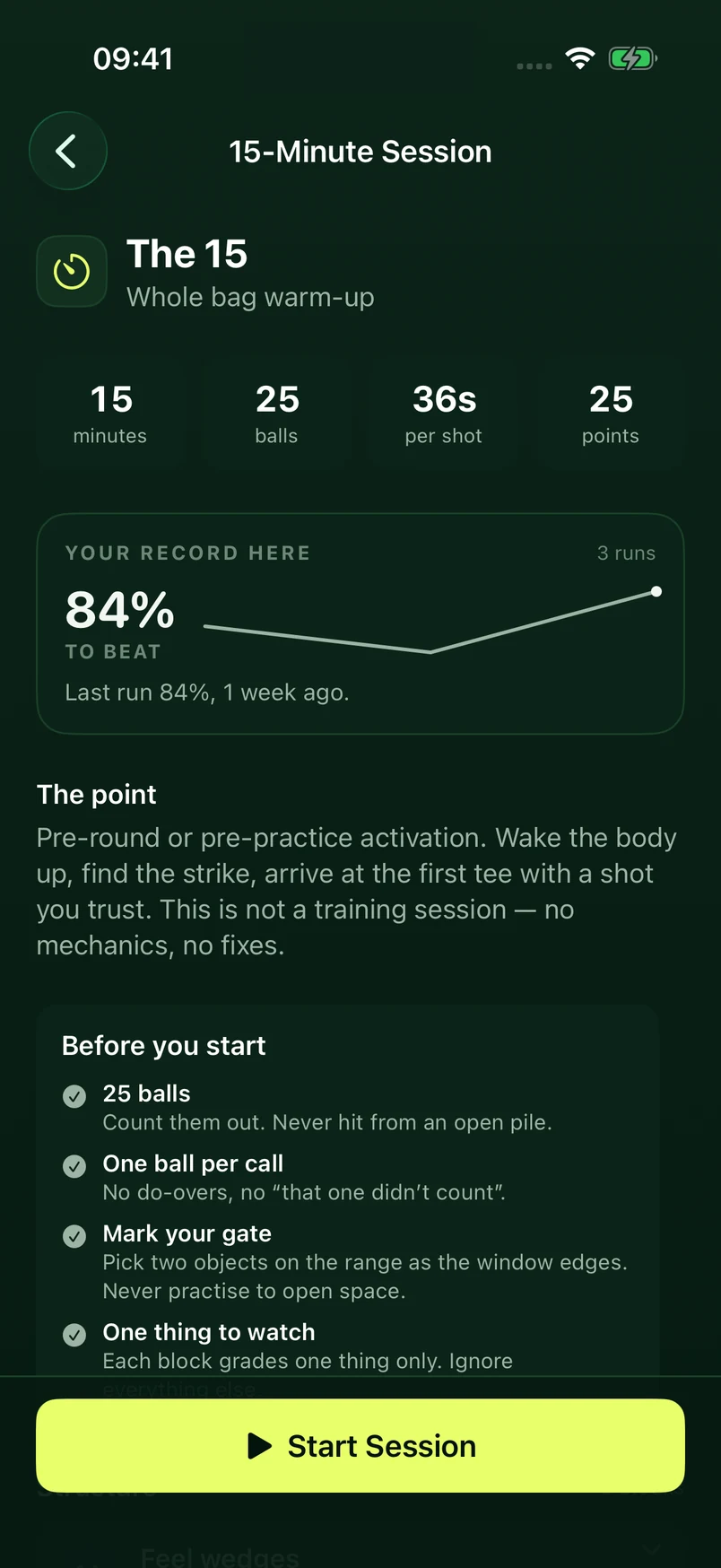
Session detail for The 15, a whole-bag warm-up, showing 25 balls in 15 minutes and a record of 84% to beat.
The record
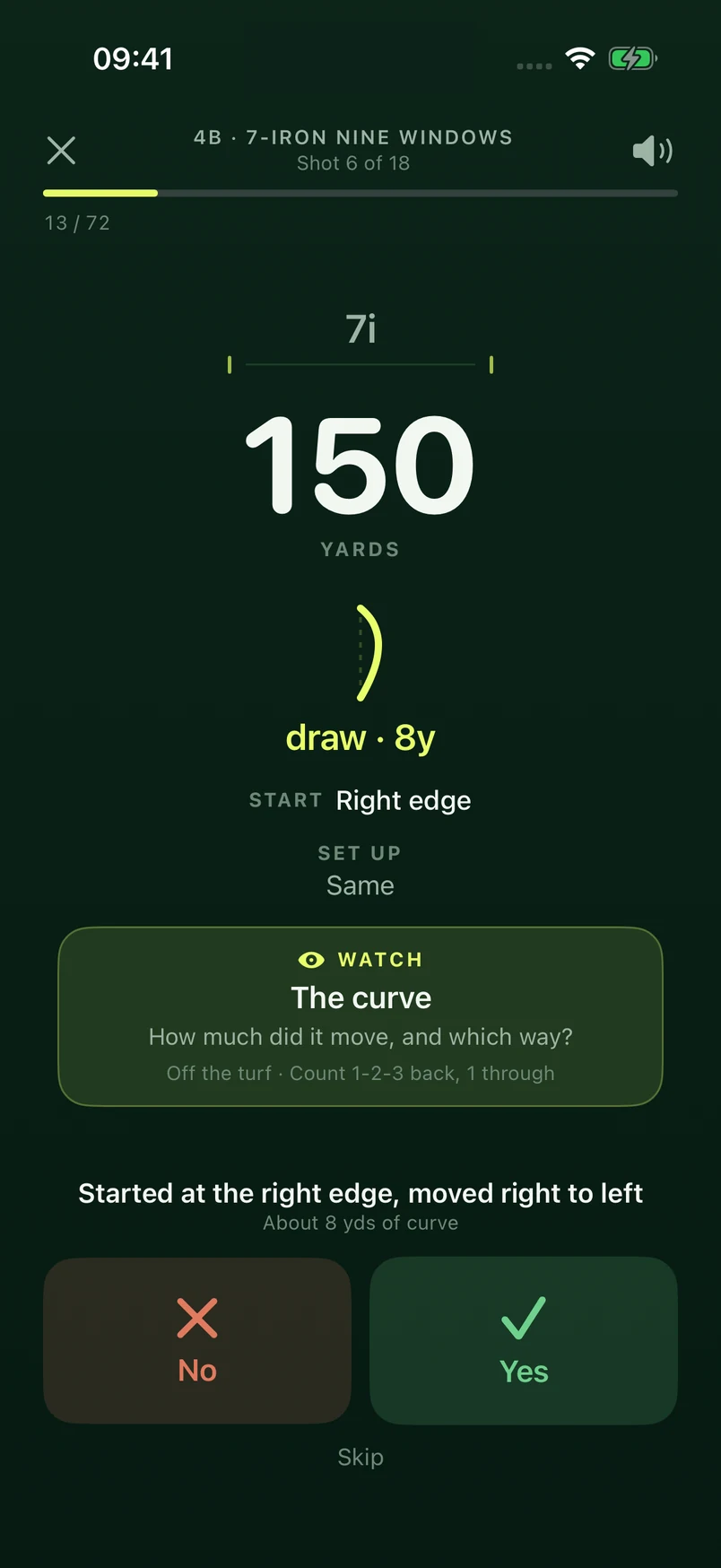
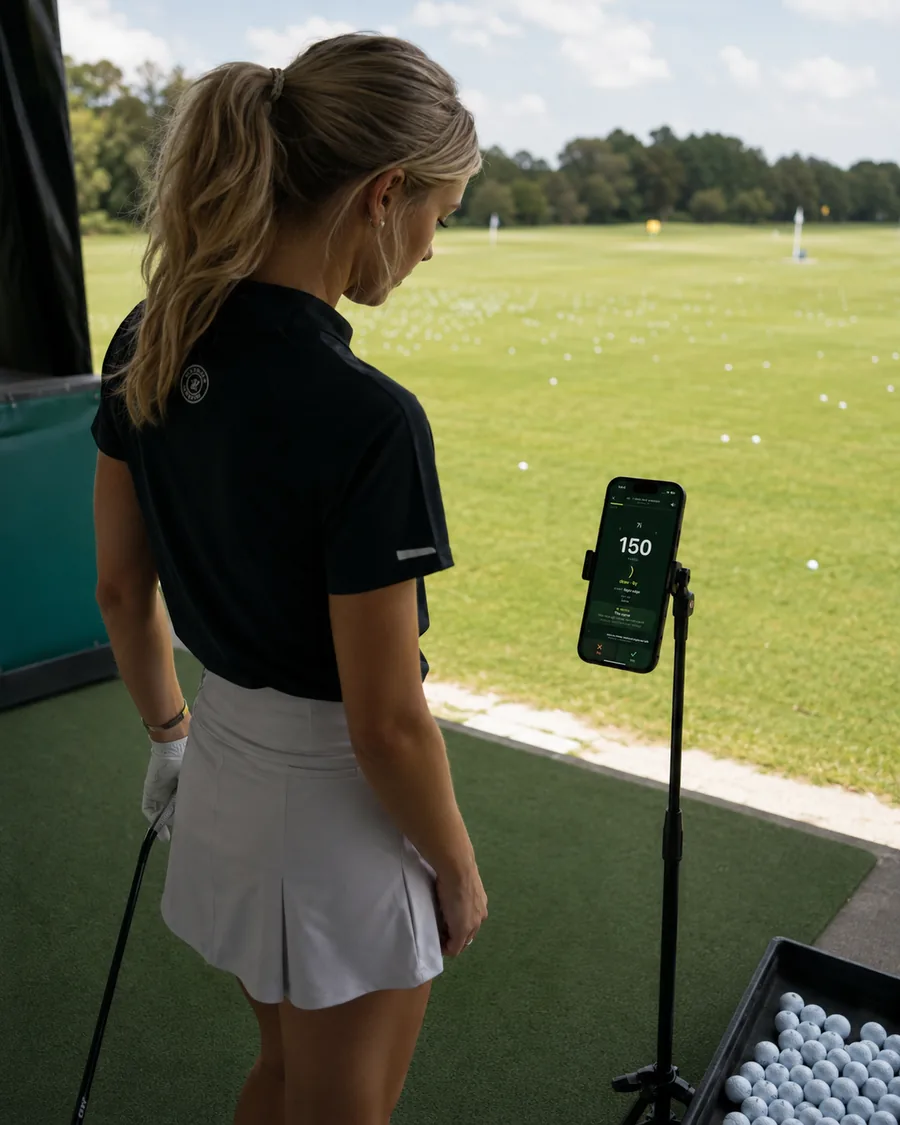
Live shot call: 7-iron, 150 yards, draw with 8 yards of curve, starting at the right edge of the gate.
The call
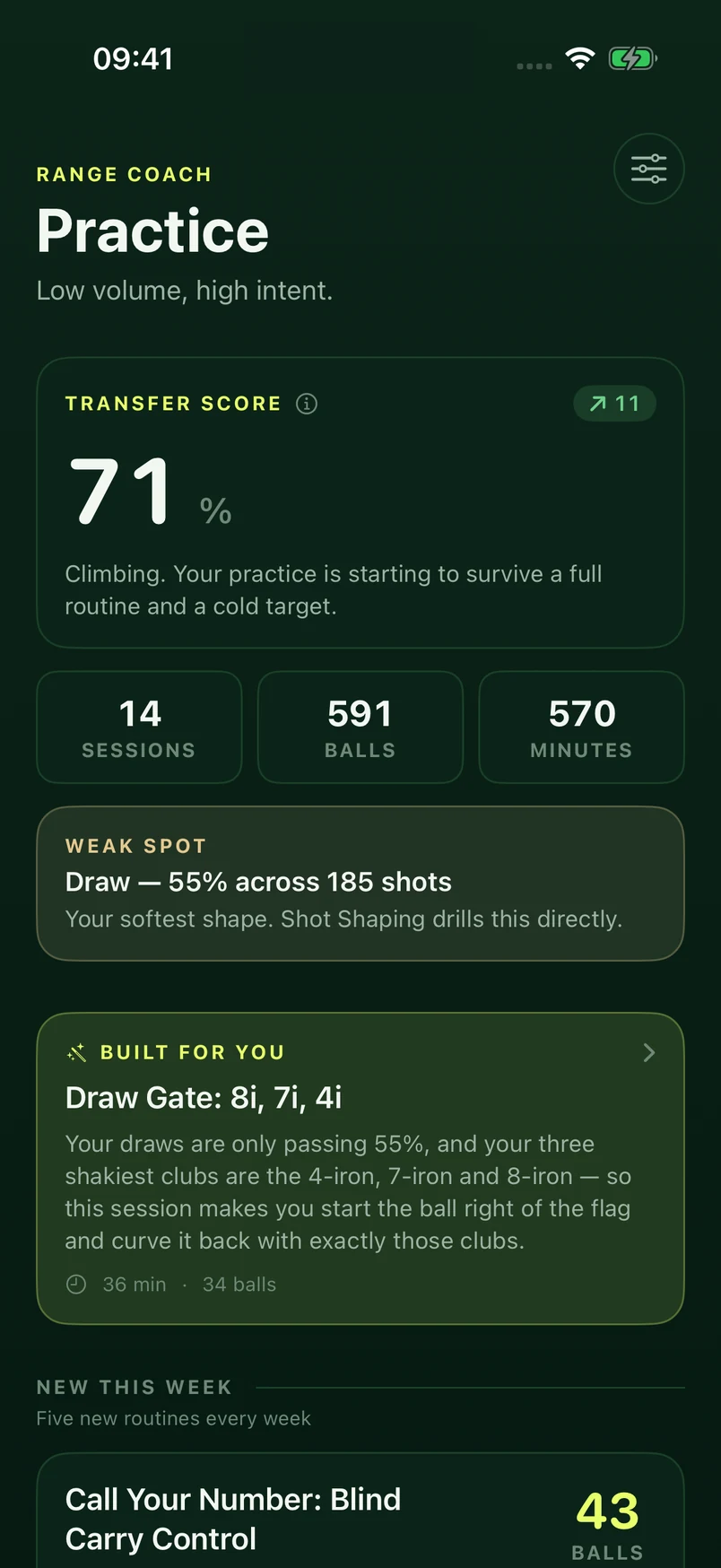
Home screen showing a 71% transfer score, a weak spot of Draw at 55%, and a routine built for it.
The progress
The problem, stated plainly

The driving range is the most-used and least-effective facility in golf.

A large bucket, the same club, the same target, no consequence for a miss and no record that it happened. It feels like work. It produces a warm feeling and almost no transfer — because nothing about it resembles golf. The research is unambiguous, and it is close to the opposite of what most people do.

What most amateurs do

The default range hour.

  • A large bucket. 100+ balls, no plan.
  • Driver-heavy, because it's the fun one.
  • Blocked practice — twenty 7-irons in a row.
  • Aim at "the flag over there". No defined miss.
  • Same club, same number, until it feels good.
  • No routine at all — rake, hit, rake, hit.

What the evidence says

And what every Range Coach session does.

  • Fewer balls, more intent — 33 in 20 minutes is a tour warm-up.
  • Over 55% wedges and short-to-mid irons. Driver ~10%.
  • Random practice — you never hit the same shot twice.
  • A window, with one side deliberately fatal.
  • New number every ~5 yards. Two or three balls, move on.
  • One ball, full pre-shot routine, every time.
The core loop

One ball. One call. One verdict.

Put the phone on your bag. There is no menu to read between shots and no timer to fight. You hit one ball, answer one question, and the next call comes.

01 / 04
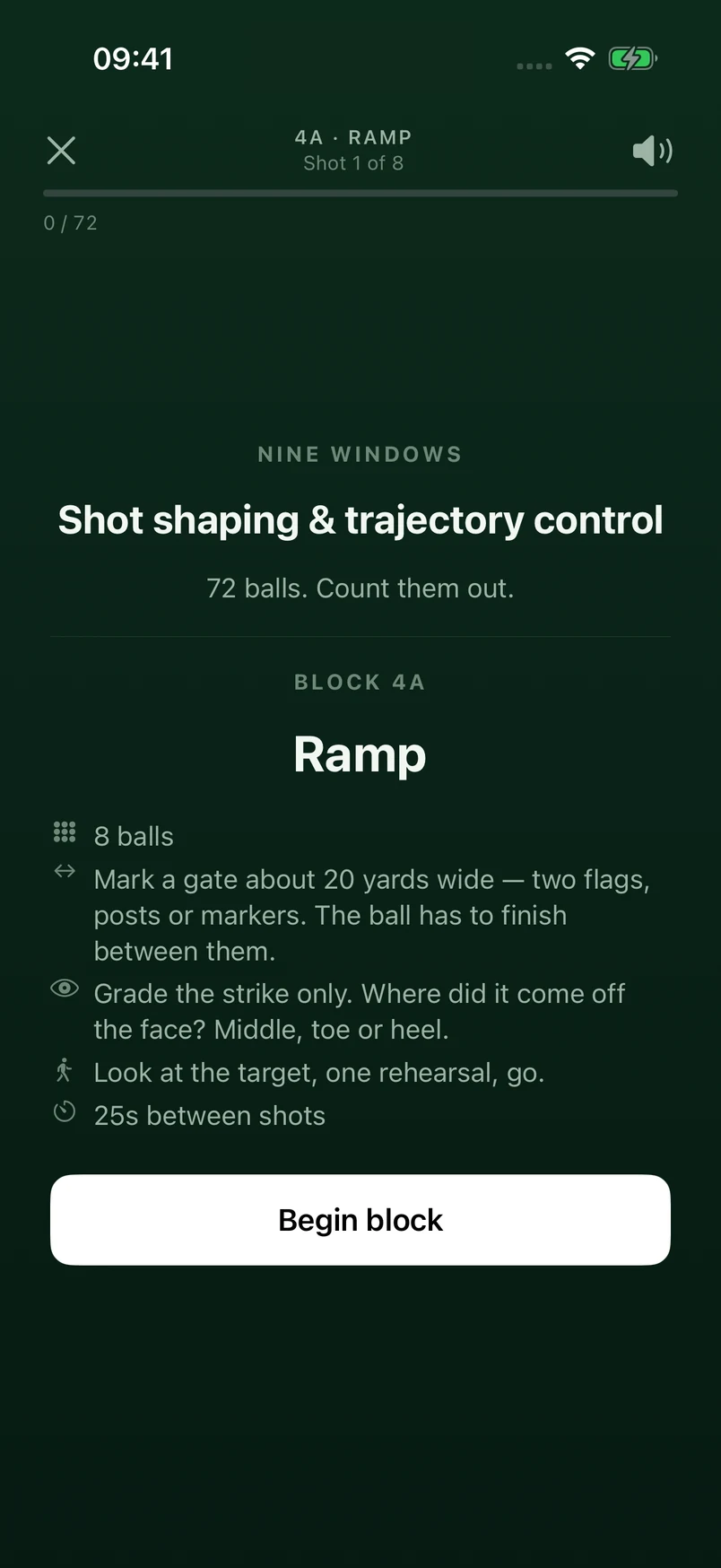
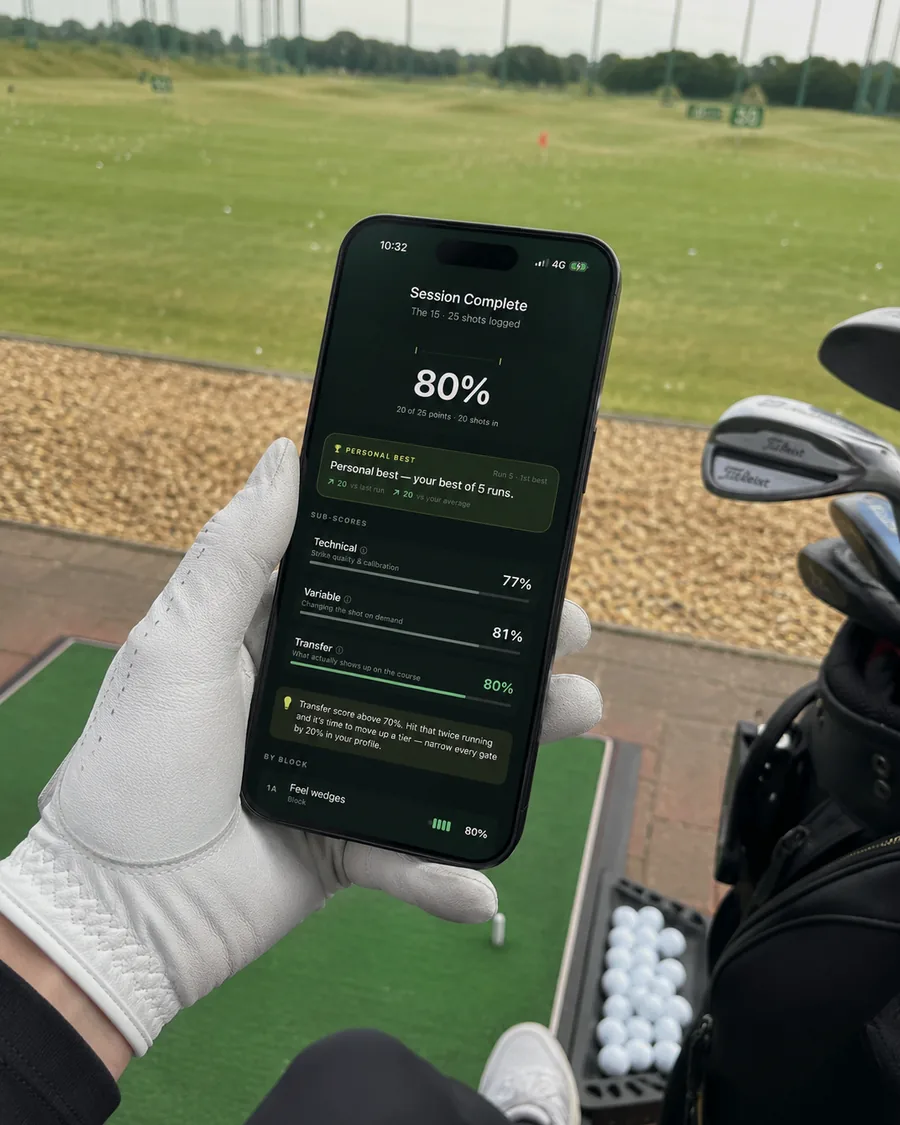
Block intro card: Ramp — 8 balls, mark a gate about 20 yards wide, grade the strike only. Live shot: 7-iron, 150 yards, draw with 8 yards of curve, start at the right edge. Live wedge shot with a single thing to watch and a yes or no verdict. Session summary: 80%, with technical, variable and transfer sub-scores.
Step 01

Set the gate before a ball is hit

Every block opens with a card that fixes the standard: how many balls, how wide the window, and the one thing you're grading. Everything else is explicitly ignored.

The gate is two physical objects on the range — a pair of flags, two distance markers. Never open space. If you can't see the edges of your target, you aren't practising to one.

Block intro card.
Step 02

The coach calls the shot out loud

A real voice — measured and unhurried, the register of a professional standing beside you rather than an assistant reading a list. Then it waits.

Coach "Seven iron. One fifty. Draw, eight yards of curve. Start it at the right edge of your gate."
Live shaping shot.
Step 03

You give it an honest yes or no

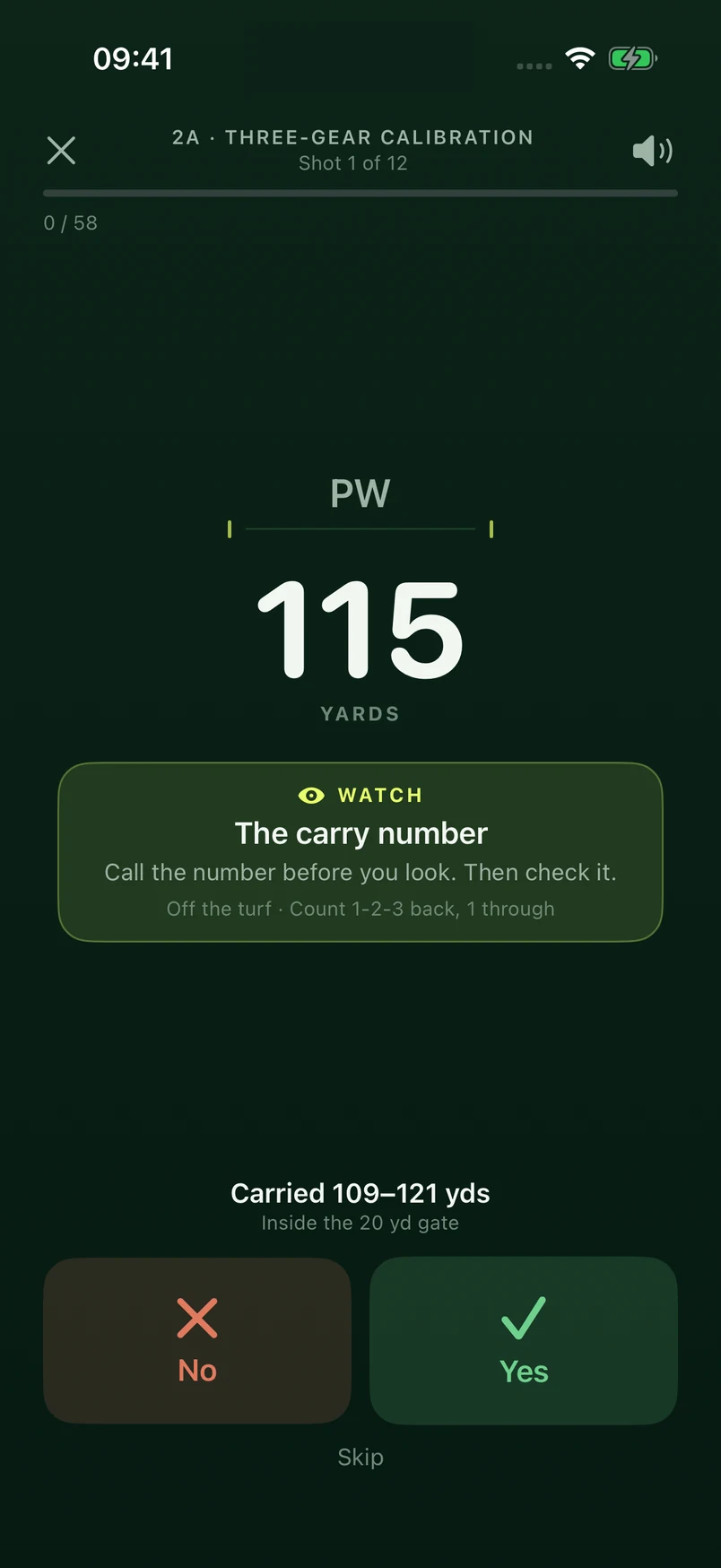
The question on screen states exactly what a pass is — "started at the right edge, moved right to left, about eight yards of curve". Not "how did that feel". A standard you either met or didn't.

You grade your own shots. That's the honest version, and it's the reason it works at any range in the world — at night, off a mat, with no hardware at all.

Live wedge shot.
Step 04

A score that predicts your scoring

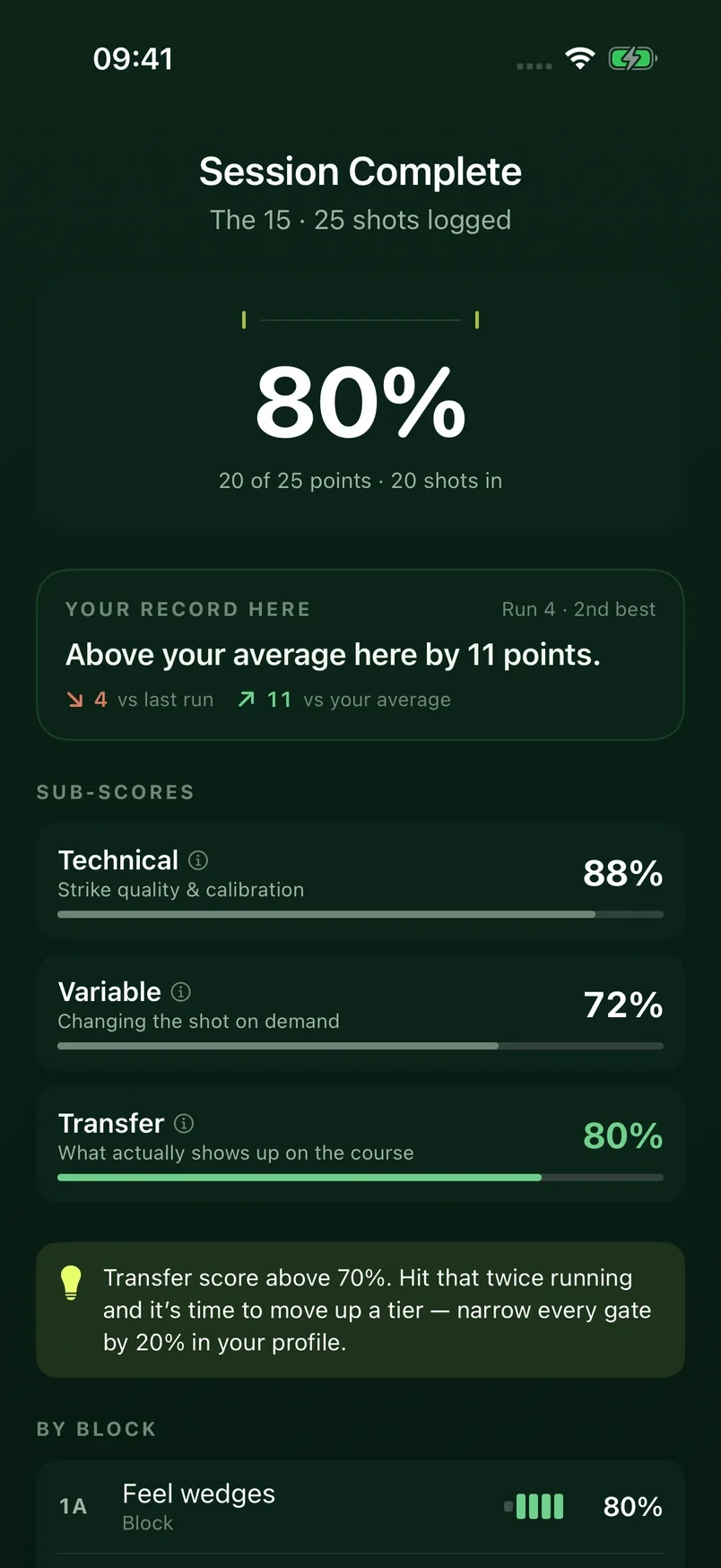
Three sub-scores from the same shots. Technical — how well you hit it. Variable — how well you control it. And Transfer, the headline number, scored only from the random, game and pressure blocks where the shot is called cold and there are no do-overs.

Above 70% twice running and it tells you to narrow every gate. Under 40% and it tells you to widen them and rebuild. The standard moves with you.

Session summary.
The AI coach

A coach who watched every ball.

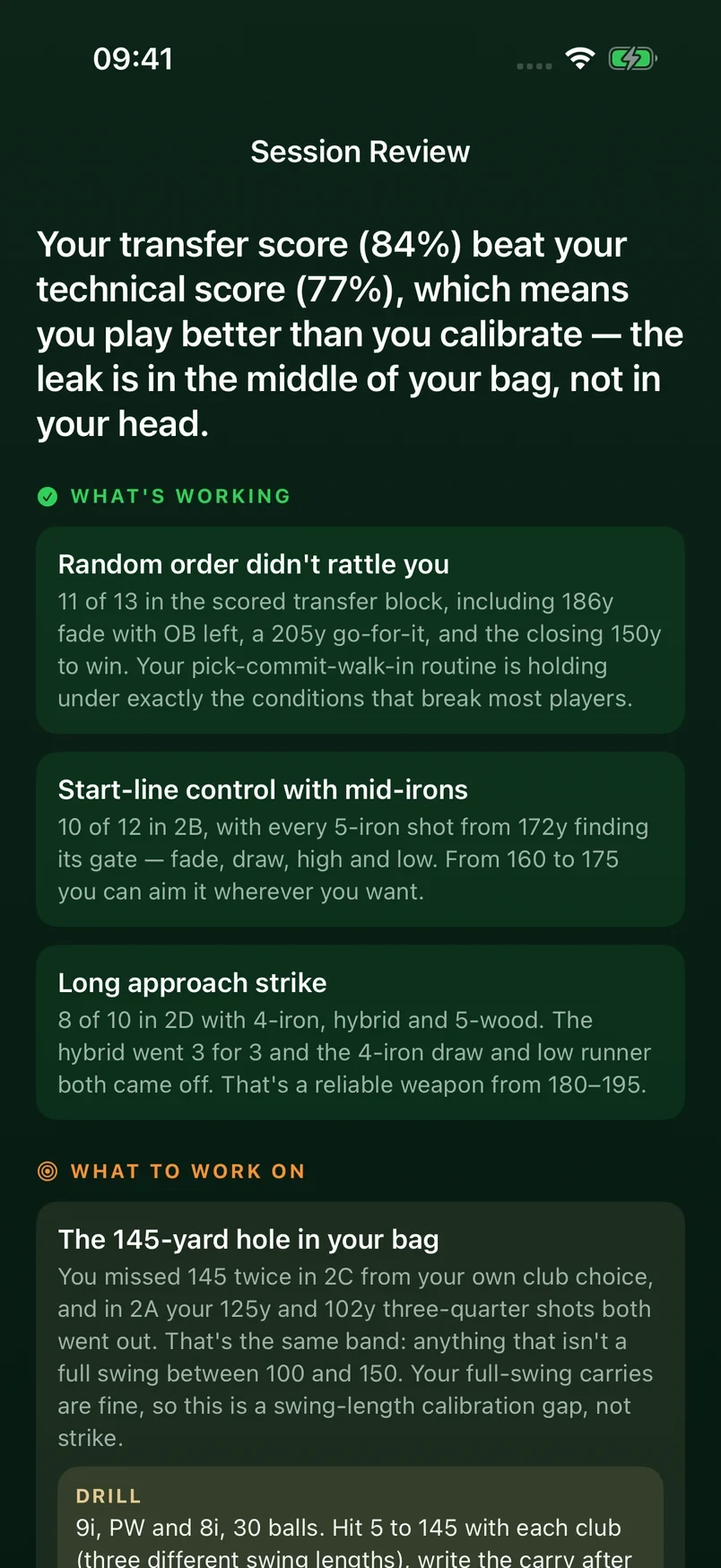
When you finish, Range Coach sends the shot log away and gets back a real read on your practice — not a summary of numbers you can already see, but a diagnosis. It names the pattern, explains the mechanism, and prescribes the fix.

Session review naming a 145-yard gap in the player's bag, with a prescribed drill.

"Your transfer score (84%) beat your technical score (77%), which means you play better than you calibrate — the leak is in the middle of your bag, not in your head."

Finds The 145-yard hole in your bag. You missed 145 twice in 2C from your own club choice, and in 2A your 125y and 102y three-quarter shots both went out.
Diagnoses That's the same band: anything that isn't a full swing between 100 and 150. Your full-swing carries are fine, so this is a swing-length calibration gap, not strike.
Prescribes 9i, PW and 8i, 30 balls. Hit 5 to 145 with each club — three different swing lengths — and write the carry after each.
TechnicalStrike quality & calibration77%
VariableChanging the shot on demand72%
TransferWhat actually shows up on the course84%
Practice built on your weaknesses

It finds the hole in your game, then writes the session that fixes it.

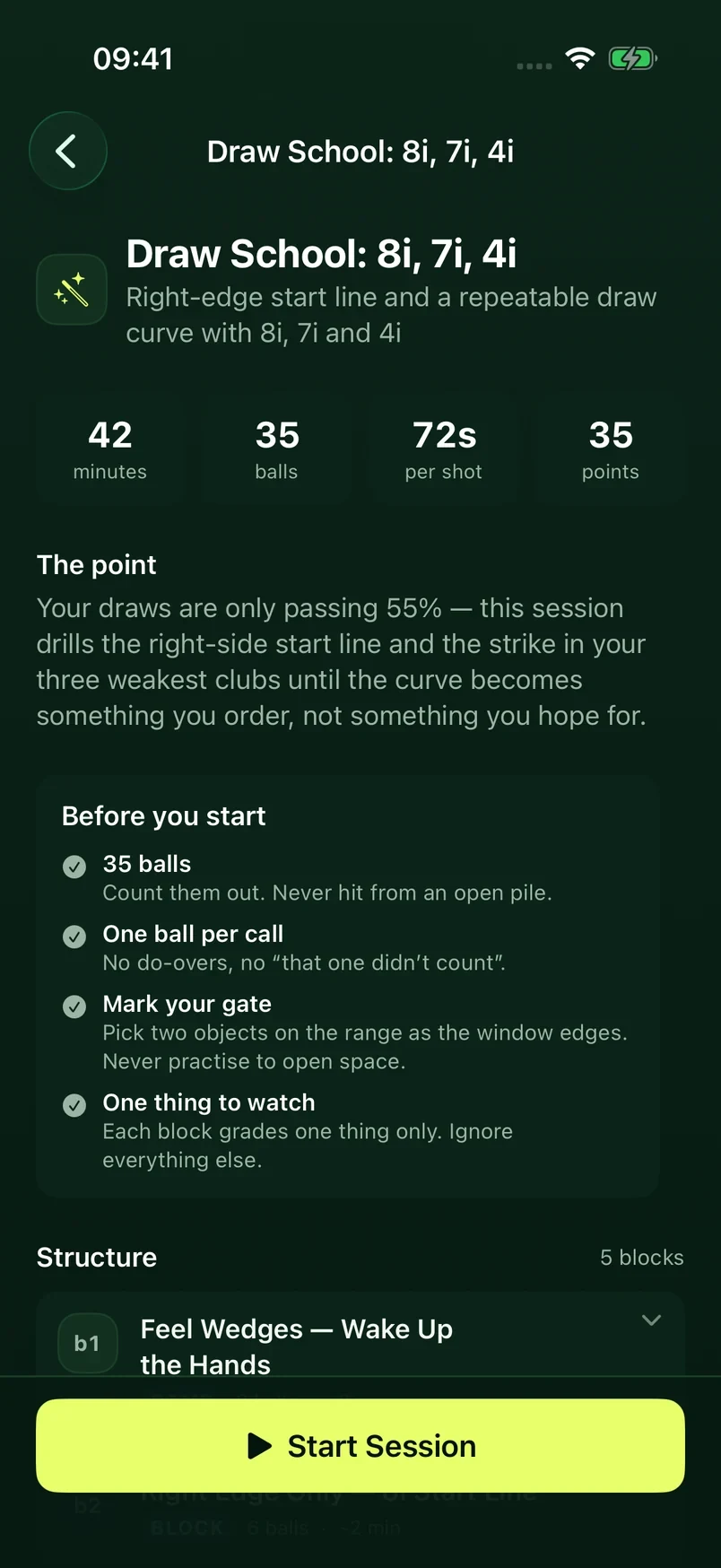
You don't pick this one. Range Coach reads every ball you've ever hit in the app — which shapes leak, which clubs let you down, which numbers you keep missing — and writes you a session that drills exactly those, sized to your own carry distances.

Spots Your draw is passing 55% across 185 shots — your softest shape, and it isn't getting better on its own.
Writes Draw School: 8i, 7i, 4i. Right-edge start line and a repeatable draw curve in your three weakest clubs.
Sizes Every target set from your carry numbers — not a generic yardage chart.
Why this session "Your draws are only passing 55% — this session drills the right-side start line and the strike in your three weakest clubs until the curve becomes something you order, not something you hope for."

A new one every three sessions. While it's still learning your game, the app says so and shows you how many sessions are left — the way to get your next routine is to go and practise.

A personal routine built from this player's own 55% draw weakness, showing its length, ball count and the reason it was written.
What it actually does

Built to be the coach, not the launch monitor.

A target you can actually see

Every shot has a gate — a window marked by two physical objects on the range. It scales to you: someone carrying a 7-iron 125 yards gets a wider window than someone carrying it 180, because the standard should be hard, not impossible.

Never open space

One thing per block

You cannot grade your strike and your start line on the same ball — you'll do neither well. Each block names one: the strike, the start line, the curve, the carry, the apex, the tempo.

Everything else ignored

Every session works offline

Routines, history and voice calls all live on the device, and the whole session's audio is cached before the first ball. A driving range is exactly where a phone has no bars.

No signal needed

Five new routines every week

Every Sunday: a distance week, a shaping week, a trajectory week, a pressure week, an awkward-lies week — each checked against the framework before it's published.

Never repeats
The session library

Hundreds of sessions, for every condition and every player.

Every ball is written in advance — club, target, shape, trajectory, gate width, lie, what to watch and what counts as a pass. Whatever the weather, whatever your handicap, whatever you've got fifteen minutes to fix — there's a session for it.

Quick · 10 min

The Ten

Emergency pre-round warm-up. You're late and you tee off in fifteen minutes.

14 balls10 min
Quick · 60 min

The Simulated Nine

Play nine holes on the range. One ball, full routine, no mulligans. Then play them again, harder.

44 balls60 min
Long game · 45 min

Approach Control

Distance control, 90–205 yards. The scoring zone, where strokes actually live.

58 balls45 min
Long game · 60 min

Shot Shaping

Nine windows — low, mid and high crossed with draw, straight and fade. Name the window before every ball.

72 balls60 min
Famous courses

The Old Grey Toon

Links golf. Enormous fairways that punish the wrong half; the angle into the pin is decided from the tee.

StrategyLinks
Famous courses

Amen Stretch

Draws, elevation change and forced carries over water. The decisions, without the green fee.

StrategyShaping
Conditions

Four Winds

Into, downwind and both crosswinds. Learn your real plays-like numbers.

FlightWind
Test yourself

The Combine

Ten targets, six balls each, scored 0–100 against tour standards. Run it every few months and watch the number move.

60 ballsBenchmark
Test yourself

The Cauldron

Streaks and sudden death. Miss once and you start the block again.

PressureSudden death
At the range

Phone on the bag. Bucket at your feet.

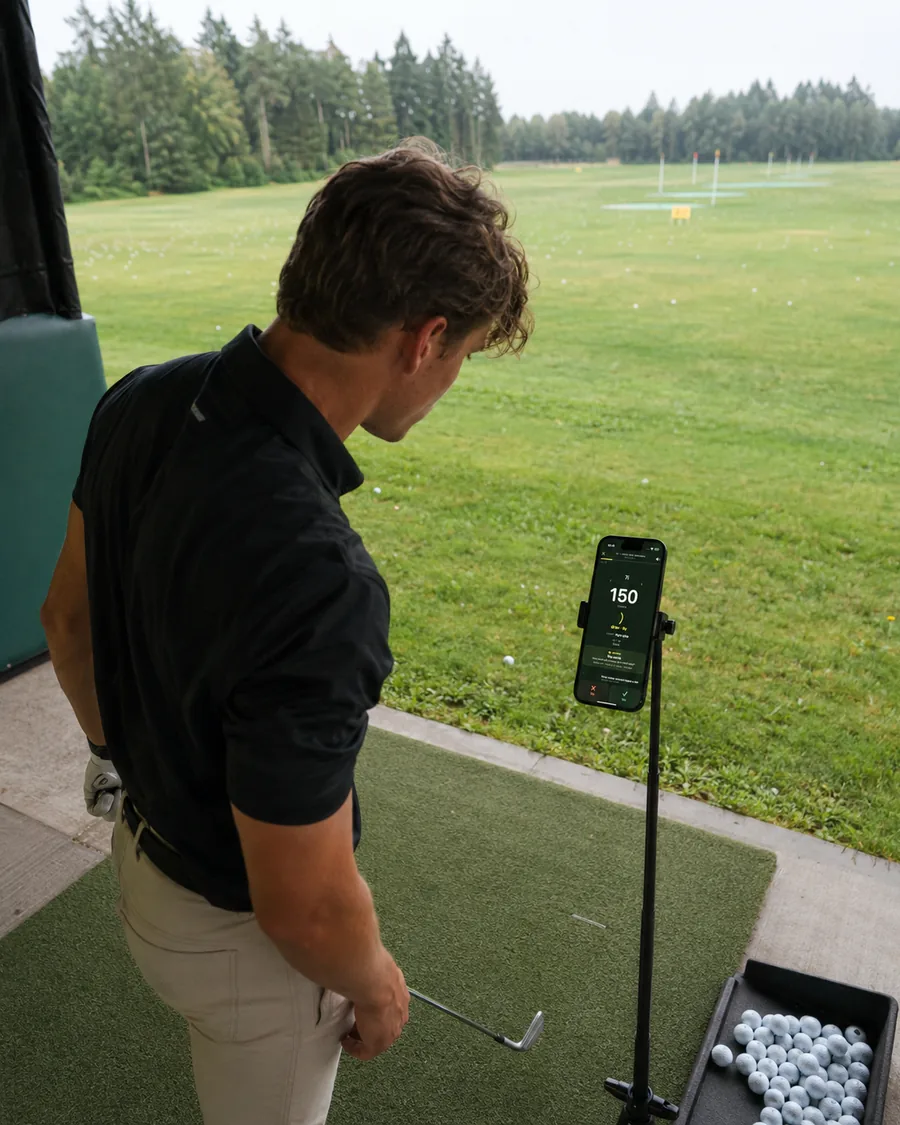
No launch monitor, no camera, no wires. A stand, a gate you picked out of two flags, and a coach telling you what to hit next.

A golfer at a driving range bay with a phone on a stand showing the next shot call: 150 yards, draw.
On the bagSet it down and forget it. The call comes to you.
A golfer reading the next shot call on a phone mounted beside the mat before playing the shot.
One ball per callRead it, commit, hit it. Then answer one question.
A gloved hand holding a phone showing a completed session: 80%, with technical, variable and transfer sub-scores.
The verdictA score at the end that predicts your scoring.
Progress that can't be gamed

There is no streak counter.

This is deliberate. A daily streak rewards showing up, which pushes people toward junk reps to keep a number alive — the exact behaviour every session in this app is designed to prevent.

Miss a week and Range Coach costs you nothing. The counter waits where you left it.

No streaks. No leaderboards. No friends.You rank only against yourself.

Transfer score over time

The number that genuinely should climb over months — not days.

Your record at each session

Run it again and you're told where this attempt ranks. "Run 5 · 1st best."

Honest movement in both directions

Against your last run and your average — one good day shouldn't make the next look like a collapse.

Your weakest shape and clubs

Across every ball you've ever hit in the app.

Being straight with you

What Range Coach isn't.

It never tells you how to swing. It tells you what to hit, and whether you hit it.

No launch monitor

It doesn't measure ball flight, carry or spin. You grade your own shots — which is why it works at any range in the world, at night, off a mat, with a bucket and nothing else.

No swing analysis

No camera, no video lessons, no mechanics. If you want to be told about your takeaway, this is the wrong app.

Driving range only

No chipping, no putting — by design. It does one job, and it does it against a framework with real citations.

Pricing

Try it properly before you pay.

Two full sessions free — any session in the library, no card required. The coach voice is free forever, for everyone.

Free

£0

Two full sessions from anywhere in the library. No account, no login, no card.

  • Any two sessions, in full
  • The coach voice — free forever
  • Full scoring and session summary
  • Works offline
Download free
Range Coach Pro

£3.99 / month

The whole library, the coach review after every session, and a routine of your own every three.

  • The whole library · every session
  • AI coach review after each session
  • A personal routine every 3 sessions
  • Five new routines every week

Coming soon — not yet purchasable

Start with two free sessions

The coach voice is free forever, for everyone, including the free sessions.

Straight answers

Questions worth asking.

Do I need a launch monitor or any hardware?
No — and that's the point. Range Coach doesn't measure ball flight, carry or spin. You grade your own shots, which means it works at any range in the world: at night, off a mat, with a bucket and a phone on your bag. Nothing else.
How does self-grading not just become cheating?
Because the question is never "how did that feel". Each block grades one specific thing and states exactly what a pass is — "started at the right edge, moved right to left, about eight yards of curve". You either saw that or you didn't. And the score that matters, transfer, only counts the cold, one-attempt blocks at the end.
What is the transfer score, exactly?
It's the headline number, and it's deliberately the hardest. It's scored only from the random, game and pressure blocks at the end of a session — where the shot is called cold, you get one attempt, and there are no do-overs. It's the closest thing on a range to golf.
Does it work without signal at the range?
Yes. Your routines, your history and your voice calls are all on the device, and the whole session's audio is cached before the first ball. A driving range is exactly where a phone has no bars.
Will it analyse my swing?
No. No camera, no video, no mechanics. Range Coach never tells you how to swing — it tells you what to hit and whether you hit it. If you want swing analysis, you want a different app, and probably a coach.
Do I need an account?
No account, no login. There are also no social features, no leaderboards and no friends — you rank only against yourself.
What's the evidence behind the sessions?
Every session is built on the Driving Range Practice Framework v1.0: Golf Digest's analysis of 250,000 range shots, 2025 Masters practice data including per-player ball counts, research on random versus blocked practice, the TrackMan Combine protocol, and published instruction on the nine-window matrix. Every shot in every session is written against it.
Does it cover chipping and putting?
No — driving range only, by design. It does one job properly rather than four badly.
Your next session

Every ball has a target,
a standard, and a verdict.

Two full sessions free. No account, no card, no hardware — just a bucket, a gate you can see, and a coach who holds you to it.

iPhone · iOS 17+ · Free to start